
Bladder stone
What are bladder stones?
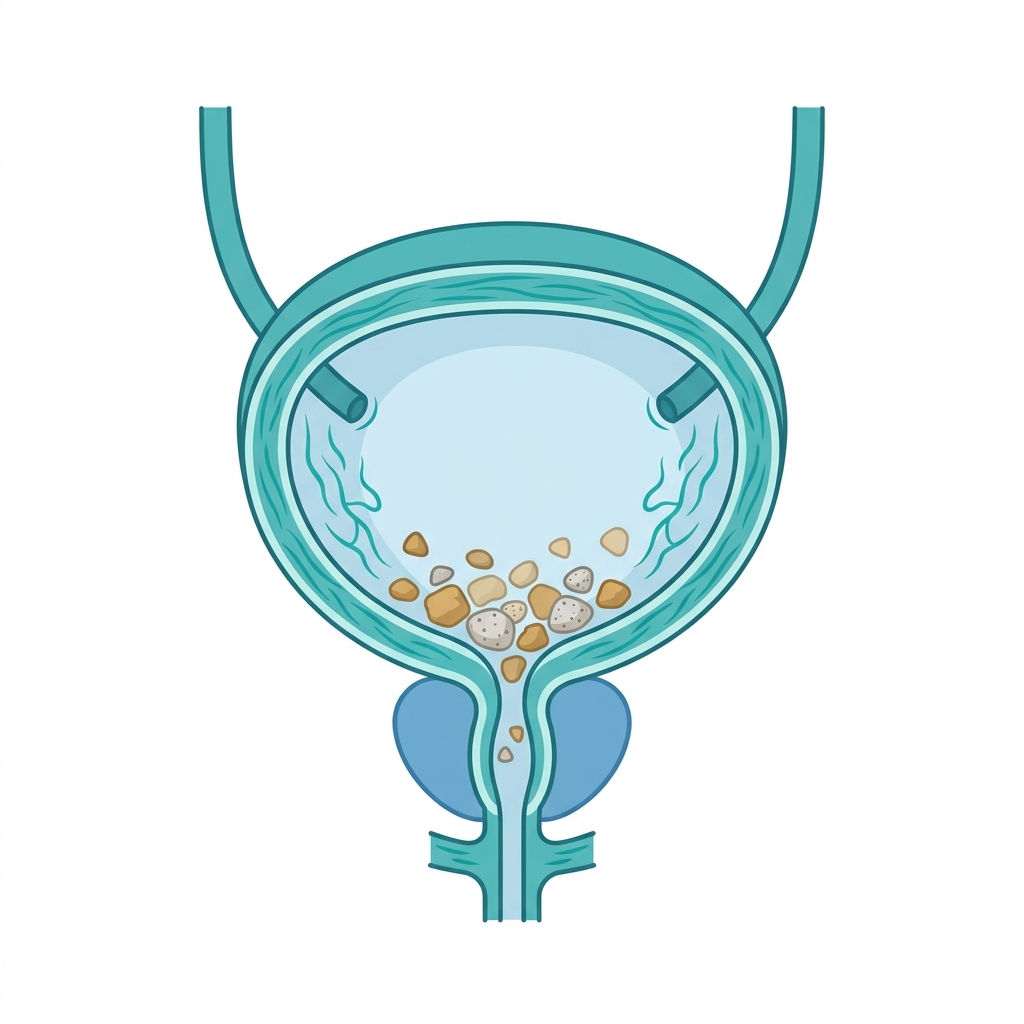
Bladder stones also called vesical calculus, or cystoliths, are caused by a buildup of minerals. They can occur if the bladder is not completely emptied after urination.
Bladder stones are caused when minerals build up in the bladder and form into small “stones.” Mostly affecting older males, bladder stones can be uncomfortable, but there are a number of treatment options available. Dr. Hiralal Chaudhari Urology Clinic in Aundh. The aim is to offer the highest standards of Urological & Andrological treatment in Aundh. Get a bladder stone treatment in Aundh.
Formation Process: Eventually, the leftover urine becomes concentrated, and minerals within the liquid turn into crystals. Sometimes, these stones will be passed while they are still very small. Other times, bladder stones can get stuck to the wall of the bladder or ureter (a pipe running from the kidney to the bladder). If this happens, they gradually gather more mineral crystals, becoming larger over time.
Bladder stones can stay in the bladder for some time and do not always cause symptoms. They are often found when an X-ray is carried out for a different medical reason.
Symptoms of bladder stones
Bladder stones may not produce symptoms straight away. But, if the stone irritates the bladder, symptoms can include the following:
- Discomfort or pain in the penis for males
- More regular urination or a stop-start flow
- Starting a stream during urination takes longer
- Pain in the lower stomach area
- Pain and discomfort when urinating
- Blood in the urine
- Cloudy or abnormally dark urine
Tests and diagnosis of bladder stones
Diagnosis of bladder stones can include a number of different tests:
Physical exam:
A doctor might put his hands on the lower abdomen to feel if the bladder is enlarged. They may examine the rectum to check if the prostate is enlarged.
Urinalysis:
A urine sample might be tested for signs of blood, bacteria, and crystallized minerals.
Spiral computerized tomography (CT) scan:
CT scans combine multiple X-ray images to build up a detailed image of internal organs.
Ultrasound:
Creates an image by bouncing sound off of internal organs.
X-ray:
Not all types of bladder stones show up on an X-ray.
Intravenous pyelogram:
A special fluid is injected into the veins and travels through to the kidneys and bladder. X-rays are taken throughout the procedure to look for signs of kidney stones.